
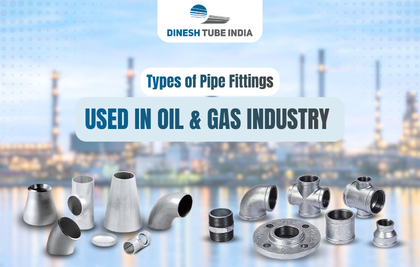
The oil and gas industry operates in some of the most demanding environments in the world. From upstream drilling platforms to downstream refineries, piping systems must withstand extreme pressure, temperature fluctuations, and corrosive substances. Selecting the right pipe fittings is critical to ensure safety, efficiency, and long-term performance.
In this blog, we explore the major types of pipe fittings used in the oil and gas industry, their functions, materials, and applications.
What Are Pipe Fittings?
Pipe fittings are mechanical components used to connect, redirect, control, or terminate the flow of fluids within a piping system. In oil and gas operations, these fittings are designed to handle high-pressure fluids such as crude oil, natural gas, steam, and chemicals.
1. Elbow Fittings
Elbows are used to change the direction of flow in a pipeline, typically at angles of 45°, 90°, or 180°.
Common Types:
- Long Radius Elbow
- Short Radius Elbow
- 45 Degree Elbow
- 90 Degree Elbow
- 180 Degree Return Elbow
Applications in Oil & Gas:
- Offshore platforms
- Refinery process lines
- High-pressure transport systems
Elbows are commonly manufactured in carbon steel, stainless steel, and alloy steel to meet different operational requirements.
2. Tee Fittings
Tees are used to combine or split fluid flow. They have three openings arranged in a T-shape.
Types of Tee Fittings:
- Equal Tee
- Reducing Tee
- Barred Tee (used in piggable pipelines)
Oil & Gas Applications:
- Distribution lines
- Branch connections
- High-pressure gas pipelines
Barred tees are particularly important in pigging operations to prevent pipeline cleaning tools from entering branch lines.
3. Reducers
Reducers are used to connect pipes of different diameters.
Types:
- Concentric Reducer
- Eccentric Reducer
Applications:
- Flow rate control
- Pump suction lines
- Compressor connections
Eccentric reducers are commonly used in horizontal pipelines to prevent air accumulation.
4. Couplings
Couplings connect two pipes of the same diameter.
Types:
- Full Coupling
- Half Coupling
- Threaded Coupling
Usage:
- Low-pressure lines
- Repair and maintenance operations
Threaded couplings are often used in smaller diameter piping systems.
5. Caps
Pipe caps are used to close the end of a pipeline.
Applications:
- Temporary shutdowns
- Pressure testing
- Future pipeline extensions
Caps must be designed to withstand internal pressure safely.
6. Cross Fittings
Cross fittings have four openings and are used where multiple pipelines intersect. They are less common in high-pressure systems but may be used in process industries and distribution networks.
7. Stub Ends and Lap Joint Flanges
Stub ends are used with lap joint flanges for systems requiring frequent dismantling.
Benefits:
- Easy maintenance
- Cost-effective flange system
- Suitable for corrosive environments
These fittings are widely used in refinery and petrochemical plants.
8. Olets (Branch Fittings)
Olets are specialized branch fittings used to create outlet connections from a main pipe.
Common Types:
- Weldolet
- Sockolet
- Threadolet
- Elbolet
Olets are commonly used in high-pressure and high-temperature oil & gas systems.
Materials Used in Oil & Gas Pipe Fittings
Pipe fittings in this industry are manufactured using high-performance materials such as:
- Carbon Steel (ASTM A234 WPB)
- Low Temperature Carbon Steel
- Stainless Steel (304, 316)
- Duplex and Super Duplex Steel
- Alloy Steel (Chrome Moly grades)
- Nickel Alloys (for corrosive environments)
Material selection depends on factors such as pressure rating, temperature, corrosion resistance, and fluid type.
Standards and Specifications
Oil and gas pipe fittings must comply with international standards such as:
- ASME B16.9
- ASME B16.11
- ASTM Standards
- API Specifications
- MSS SP Standards
Compliance ensures durability, safety, and operational efficiency.
Key Considerations When Selecting Pipe Fittings
When choosing pipe fittings for oil and gas applications, consider:
- Pressure and temperature rating
- Corrosion resistance
- Compatibility with pipe material
- Welding or threaded requirements
- Industry compliance standards
Proper selection reduces downtime, prevents leaks, and enhances system reliability.