
Abrasion Resistant Steel Plates for Mining, Cement & Material Handling
Dinesh Tube India supplies AR (abrasion resistant) wear plates in AR400, AR450, AR500 and AR600 grades from Mumbai to fabricators, OEMs and plant maintenance teams across India and overseas. AR plates are quenched and tempered, through-hardened steel plates. They last several times longer than mild steel in buckets, chutes, hoppers, liners and truck bodies that face constant sliding and impact wear.
We stock and source plates from 8 mm to 65 mm thick, including Abrex 400, 450, 500 and 600 and equivalent-class plates, cut to size or profiled to drawing. Every plate comes with a mill test certificate showing its Brinell hardness. Send the grade, thickness, size and quantity for a quote, with delivery anywhere in India, including North India, and for export.
What Is an AR Plate?
An AR plate (abrasion resistant plate, also called a wear plate or wear resistant plate) is a low-alloy steel plate that is quenched and tempered, so it is hard all the way through, not just on the surface. Unlike carbon steel plate grades, AR plates are not defined by an ASTM chemistry. They are sold by Brinell hardness (BHN): an AR400 plate has a nominal hardness of about 400 BHN, AR450 about 450 BHN, and AR500 about 500 BHN. Each mill uses its own chemistry to reach that hardness while keeping enough toughness for impact.
Harder plates resist wear longer, but they are more difficult to bend, cut and weld. Most buyers therefore choose AR400 for general wear parts, AR450 for longer life in the same parts, and AR500 or AR600 where sliding abrasion is severe and fabrication is simple.
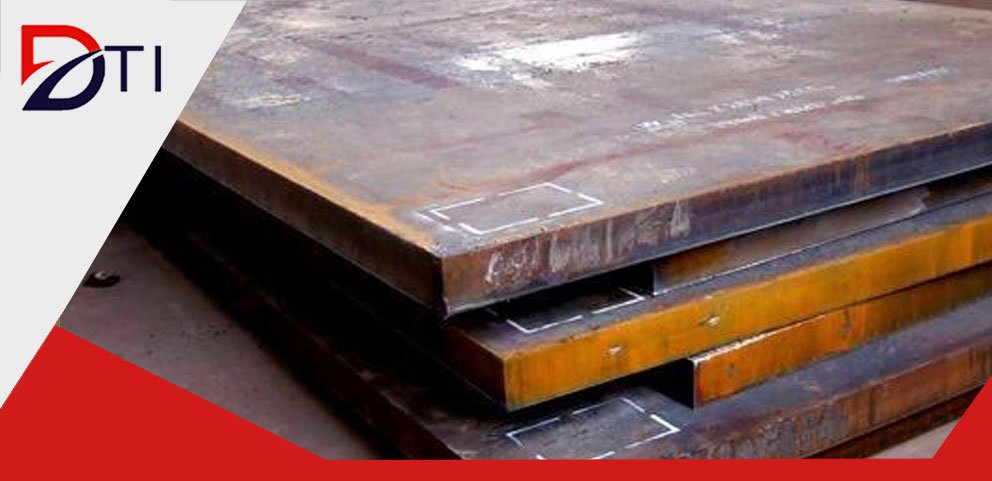



AR Plate Hardness by Grade (BHN)
Hardness ranges are typical and vary slightly by mill and thickness.
AR400 vs AR450 vs AR500: Which to Choose?
AR Plate Equivalent Brands
Many mills make plates in the same hardness classes under their own brand names. Plates in the same class are often used interchangeably, but chemistry, toughness and thickness range differ by mill.
Abrex, Hardox, Quard and SAILHARD are trademarks of their respective mills (Nippon Steel, SSAB, NLMK and SAIL). The table shows comparable hardness classes only.
Typical Chemical Composition of AR Plates (%)
There is no single standard chemistry for AR plates. Carbon content generally rises with hardness grade and thickness. The exact analysis is shown on each plate's mill certificate.
Cutting, Bending & Welding AR Plates