
CS Tubes for Boilers, Heat Exchangers & Condensers
Dinesh Tube India supplies carbon steel tubes from Mumbai to boiler makers, heat exchanger fabricators, EPC contractors and plant maintenance teams in India and abroad. We supply both seamless and ERW (welded) CS tubes to ASME and ASTM specifications, including SA179, SA214, SA192, SA210 A1, SA178 and SA334 Grade 1, cut to length with an EN 10204 3.1 mill test certificate.
This page compares the main carbon steel tube grades so you can choose the right one. Each grade also has its own page with full chemistry, mechanical properties, tolerances and sizes. Send us your grade, OD, wall thickness (or BWG), length and quantity for a quote.
What Is a Carbon Steel Tube?
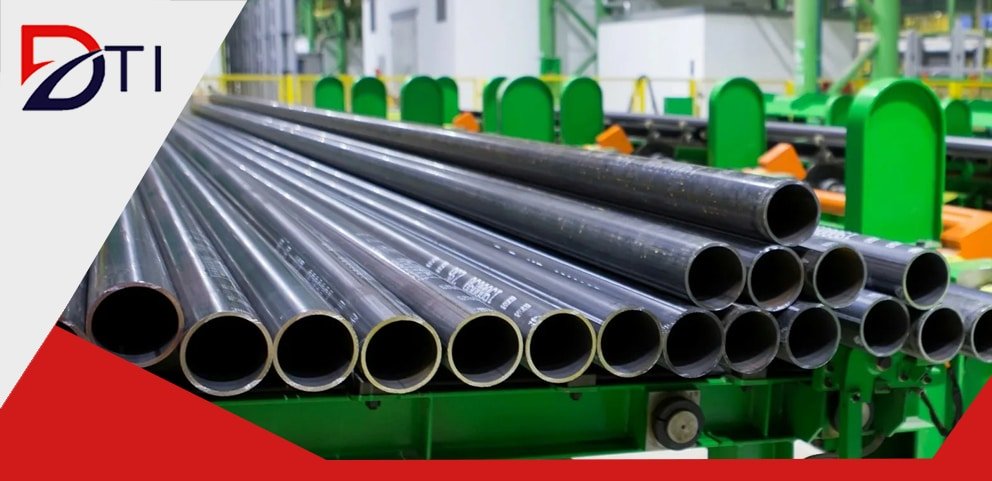
A carbon steel tube (often shortened to CS tube or CS tubing) is a round tube made from plain carbon steel: iron with a controlled amount of carbon and manganese and no deliberate alloying additions. Most tube grades are low carbon (0.06–0.18% C), which keeps them soft and ductile so they can be bent, expanded into tube sheets and welded easily. Medium-carbon grades such as SA210 A1 trade some ductility for higher strength at boiler temperatures.
Unlike pipes, which are ordered by nominal bore and schedule, tubes are ordered by actual outside diameter (OD) and wall thickness, often in BWG. They are made to tighter tolerances because they are used where heat passes through the tube wall: boilers, superheaters, economisers, heat exchangers, condensers and air preheaters. For carbon steel line and process pipe (ASTM A106, A53, API 5L), see our carbon steel pipes page.

Carbon Steel Tube Grades Compared
The table below shows the main carbon steel tube grades we supply. Click a grade for its full specification page.
OD ranges are those covered by each ASTM/ASME specification. Sizes outside these ranges are possible by agreement.
Carbon Steel Tube Chemical Composition & Mechanical Properties
Phosphorus and sulphur are limited to 0.035–0.048% max depending on grade. SA334 Grade 1 is impact tested at −45 °C. See each grade page for full limits.
SA214 vs SA179: What Is the Difference?
This is the most common question we get about carbon steel tubes. SA179 and SA214 share the same low-carbon chemistry and the same 72 HRB maximum hardness, and both cover heat exchanger and condenser tubes up to 3" OD. The difference is how they are made: SA179 is seamless and cold drawn, while SA214 is electric-resistance welded (ERW) and heat treated after welding.
SA214 usually costs less and is the most common base tube for finned tubes and air-cooled heat exchangers. SA179 has a higher allowable stress in the ASME code and is specified where the design or the client asks for seamless tube. Neither is a substitute for the other unless the purchaser approves it.
Seamless vs ERW Carbon Steel Tubes
Seamless Carbon Steel Tubes
ERW Carbon Steel Tubes
Which Carbon Steel Tube Grade to Choose
For boilers in India, these tubes can be supplied with IBR certification. See our IBR tubes and boiler tubes pages. For a full heat exchanger tube range including stainless and copper alloys, see heat exchanger tubes.
Not sure which grade you need? Send your drawing or tube schedule (grade, OD, wall, length and quantity) to kamlesh@dineshtube-india.com or call +91 83559 10913. You can also send an enquiry.
Common Carbon Steel Tube Sizes
Other OD and wall combinations, including boiler tubes up to 5" OD with heavier walls, are available on request.
Carbon Steel Tube Applications
See also our boiler industry range and the full carbon steel products list.
Carbon Steel Tubes: FAQs
What is a carbon steel tube?
A carbon steel tube (CS tube) is a round tube made from plain carbon steel, iron with a controlled amount of carbon and manganese and no deliberate alloying. Tubes are ordered by outside diameter and wall thickness, and are used where heat has to pass through the tube wall: boilers, heat exchangers, condensers, air preheaters and economisers. Common grades are ASME SA179, SA214, SA192, SA210 A1, SA178 and SA334 Grade 1.
What is the difference between SA214 and SA179?
SA179 and SA214 have the same low-carbon chemistry (0.06–0.18% C) and the same 72 HRB maximum hardness, and both are heat exchanger and condenser tubes up to 3 in. OD. SA179 is seamless and cold drawn; SA214 is electric-resistance welded (ERW). SA214 usually costs less, while SA179 is specified when the design code or client asks for seamless tube.
Which is better, seamless or ERW carbon steel tubes?
Neither is better for every job. Seamless tubes (SA179, SA192, SA210) have no weld seam and are preferred for high-pressure boilers and critical services. ERW tubes (SA214, SA178) are made from strip, have tighter wall tolerance and cost less, and are widely used in heat exchangers, air preheaters and low- to medium-pressure boilers. The design code and the client specification decide which is allowed.
Which carbon steel tube grade is used for boilers?
SA192 is the standard seamless tube for high-pressure boilers. SA210 Grade A1 is a stronger, medium-carbon seamless tube for boiler, superheater and economiser tubes. SA178 Grade A is the ERW option for lower-pressure boilers, flues and safe ends. For boilers in India, we can supply these tubes with IBR Form III-B certification.
Which carbon steel tube grade is used for heat exchangers?
SA179 (seamless) and SA214 (ERW) are the two main low-carbon grades for shell-and-tube heat exchangers, condensers and air coolers. For services below about −29 °C, SA334 Grade 1 is used because it is impact tested at −45 °C. For the cold end of air preheaters, Corten ASTM A423 Grade 1 resists acid dew point corrosion.
What is the difference between a carbon steel tube and a carbon steel pipe?
Tubes are ordered by actual outside diameter and wall thickness (for example 25.4 mm OD × 2.11 mm or 14 BWG) and are made to close tolerances for heat transfer equipment. Pipes are ordered by nominal bore and schedule (for example 2" NB SCH 40) and carry fluids in piping systems. For pipe grades such as ASTM A106 and API 5L, see our carbon steel pipes page.
Do carbon steel tubes rust?
Yes. Carbon steel has no chromium, so it rusts when exposed to moisture and air. Tubes are supplied with a light oil or varnish coating and end caps to protect them in transit and storage. In service, corrosion is controlled by water treatment, design corrosion allowance or, where needed, by choosing stainless or Corten steel.
Do you supply IBR certified carbon steel tubes?
Yes. We supply SA192, SA210 A1, SA178 and SA179 tubes with Indian Boiler Regulations (IBR) Form III-B certificates, issued by the inspecting authority, for boilers and pressure parts in India. Please state the IBR requirement in your enquiry, as it must be arranged before dispatch.
Export Destinations for Carbon Steel Tubes
We export carbon steel tubes to the Middle East (UAE, Saudi Arabia, Qatar, Kuwait, Oman, Bahrain, Iraq, Jordan), Africa (Nigeria, Egypt, South Africa, Kenya, Ghana, Algeria, Morocco, Tunisia), Asia (Japan, South Korea, Singapore, Malaysia, Indonesia, Thailand, Vietnam, Philippines, Bangladesh, Sri Lanka), Europe (Italy, Spain, Portugal, France, Netherlands, Belgium, Poland, Romania, Turkey, United Kingdom), and the Americas (United States, Canada, Mexico, Brazil, Chile, Peru, Colombia, Argentina).