
Seamless Cold-Drawn SA179 Tubes for Heat Exchangers & Condensers
SA179 material is seamless, cold-drawn low-carbon steel tube for heat exchangers and condensers (ASTM A179 / ASME SA-179): 3.2–76.2 mm (1/8"–3") OD, 0.06–0.18% carbon, 325 MPa minimum tensile strength and 72 HRB maximum hardness. It is ordered by actual tube OD and minimum wall, not by pipe schedule.
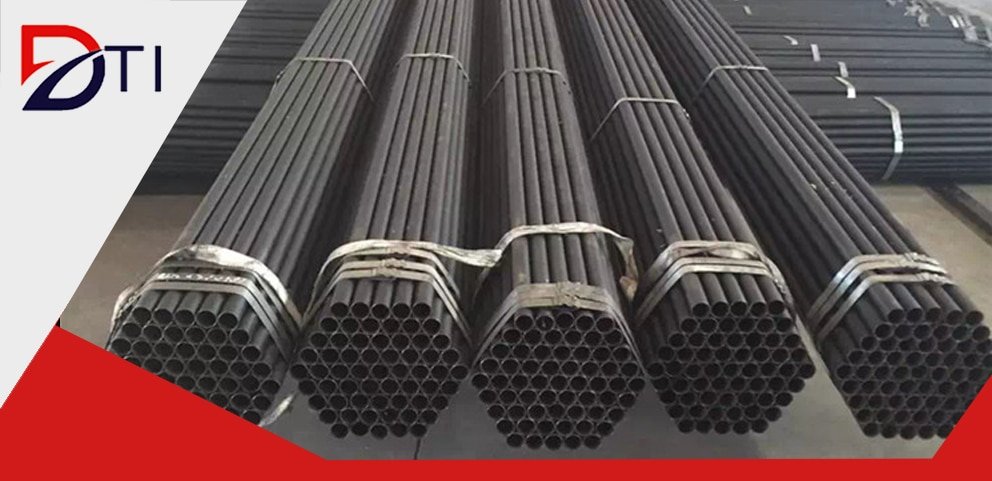
Dinesh Tube India supplies ASME SA179 carbon steel tubes (ASTM A179) from Mumbai to fabricators, EPC contractors and OEMs in India and abroad. SA179 is a seamless, cold-drawn, low-carbon steel tube made for tubular heat exchangers, condensers, feedwater heaters and similar heat transfer equipment. Its low carbon content and controlled hardness make it easy to expand and roll into tube sheets, and the cold-drawn finish gives tight dimensional tolerances for reliable bundle assembly.
We supply SA179 tubes in common sizes from 6.35 mm OD, and up to the 76.2 mm (3") limit of the specification on request, in straight cut lengths, with an EN 10204 3.1 mill test certificate on every order. Tell us the OD, minimum wall thickness, length and quantity, and we will send a quote with delivery time.
What Is SA179 Material?
SA179 is the ASME designation of ASTM A179/A179M, the standard specification for seamless cold-drawn low-carbon steel heat exchanger and condenser tubes. The specification covers tubes from 1/8 in. to 3 in. (3.2 to 76.2 mm) outside diameter. Tubes are made by the seamless process, cold drawn, and then heat treated at 1200 °F (650 °C) or higher after the final cold draw. General requirements such as tolerances, testing and marking come from ASTM A450/A450M.
The steel is a plain low-carbon grade (carbon 0.06–0.18%) with no deliberate alloying. That gives good thermal conductivity, good weldability and a soft, ductile tube (72 HRB maximum) that expands cleanly into tube sheets without cracking. SA179 is not meant for high-temperature boiler pressure parts; for those, see our SA192 boiler tubes or SA210 A1 tubes.
Table of Contents
Specification sheet: Download ASTM A179 Tube Specification (PDF)
Edition record: the current ASTM edition is A179/A179M-24 (issued March 2024). The values on this page and in our PDF sheet (Rev. 1) were reviewed against it on 3 November 2026. Always order to the edition named in your design code or purchase specification.



SA179 Chemical Composition (%)
SA179 Mechanical Properties
Mechanical property requirements do not apply to tubes under 3.2 mm (1/8") OD or with walls under 0.4 mm (0.015").
Heat Treatment & Testing
After the final cold draw, SA179 tubes are annealed at 650 °C (1200 °F) or higher to restore ductility. Every lot is then tested as required by ASTM A179 and A450:
Test pressure is calculated as P = 32,000 t/D (psi), limited to the maximums above.
SA179 Dimensional Tolerances (ASTM A450)
Cut length tolerance (lengths up to 7.3 m / 24 ft): +3.2 mm / −0 for OD under 50.8 mm; +4.8 mm / −0 for OD 50.8 mm and over. Longer cut lengths carry an extra +3.2 mm per 3 m (10 ft), up to +12.7 mm.
SA179 Tube Sizes We Supply
Common heat exchanger sizes are listed below. Other OD and wall combinations up to 76.2 mm OD are available on request.
BWG reference: 18 BWG = 1.245 mm, 16 BWG = 1.651 mm, 14 BWG = 2.108 mm, 13 BWG = 2.413 mm, 12 BWG = 2.769 mm, 10 BWG = 3.404 mm.
SA179 Tube Size vs Pipe Schedule: What to Specify
SA179 is a tube specification. Tubes are ordered by their actual outside diameter and minimum wall (in mm or BWG). Pipe is ordered by nominal pipe size (NPS) and schedule, where the real OD is larger than the nominal size and the schedule wall is a nominal figure. Mixing the two is the most common reason an SA179 enquiry has to be re-quoted.
How to Order SA179 Tubes: RFQ Example
A complete enquiry lets us quote in one round. This is a typical SA179 request for heat exchanger tubes; replace the values with your own.
Send your SA179 RFQ in this format to kamlesh@dineshtube-india.com, call or WhatsApp +91 83559 10913, or through our enquiry form.
SA179 Equivalent Grades
These are the closest comparable grades, not exact equivalents. Check your design code before substituting one for another.