
Carbon Steel & Alloy Steel Boiler Tubes with IBR
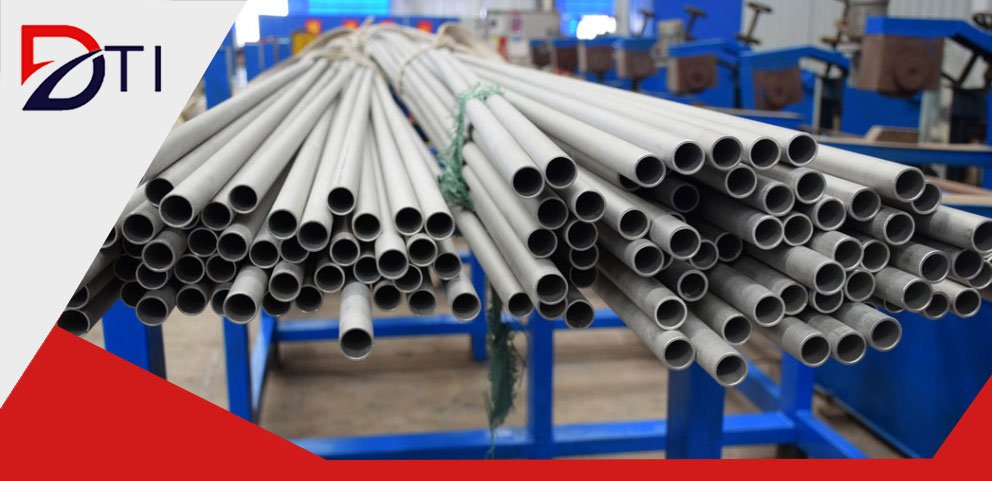
Dinesh Tube India supplies boiler tubes from Mumbai to boiler makers, power plants, sugar mills, refineries and boiler maintenance contractors in India and abroad. We supply carbon steel boiler tubes to SA192, SA210 A1 and SA178, and alloy steel boiler tubes to SA213 T11, T22 and T91, cut to length with an EN 10204 3.1 mill test certificate and IBR Form III-B on request.
This page shows which tube grade is used in each part of a boiler. Each grade has its own page with full chemistry, properties and sizes. Send us your tube schedule (grade, OD, wall, length, quantity and IBR requirement) for a quote.
What Are Boiler Tubes?
Boiler tubes are the pressure tubes inside a boiler that carry water and steam while hot combustion gases pass around them (water-tube boilers), or carry the hot gases through a shell of water (fire-tube boilers). They must hold high internal pressure at high temperature for years, so they are made to pressure-rated specifications such as ASME SA192, SA210, SA178 and SA213, mostly seamless, and ordered by outside diameter and wall thickness.
The right tube grade depends on the metal temperature in each part of the boiler. Water walls and economisers run cooler and use carbon steel tubes. Superheaters and reheaters run hotter and need chrome-moly alloy steel tubes, which keep their strength and resist oxidation at high temperature.
Boiler Tube Grades by Boiler Zone
Typical selections only. The boiler designer chooses grades from metal temperature, pressure and the design code.
Boiler Tube Grades Compared
Re-tubing a boiler or building a new one? Send your tube schedule (grade, OD, wall, length, quantity and IBR requirement) to kamlesh@dineshtube-india.com or call +91 83559 10913. You can also send an enquiry.
Types of Boiler Tubes
Carbon Steel Boiler Tubes
Alloy Steel Boiler Tubes
IBR Boiler Tubes
Tubes for boilers registered in India must meet the Indian Boiler Regulations and be supplied with IBR Form III-B, issued after inspection by an IBR-recognised inspecting authority. We supply carbon steel and alloy steel boiler tubes with IBR certification on request. See our IBR tubes and IBR pipes pages for details of the process and documents.
Boiler Tube Applications
See also our boiler industry range and heat exchanger tubes.
Boiler Tubes: FAQs
What are boiler tubes?
Boiler tubes are the steel tubes inside a boiler that carry water and steam while hot combustion gases flow around them, or, in fire-tube boilers, carry the hot gases through the water. They are made to pressure-rated specifications such as ASME SA192, SA210 and SA213, ordered by outside diameter and wall thickness, and are mostly seamless.
Which material is used for boiler tubes?
The material depends on the metal temperature in each part of the boiler. Carbon steel (SA192, SA210 A1, SA178) is used for water walls, economisers and risers. Chrome-moly alloy steel to SA213 (T11, T22, T91) is used in superheaters and reheaters where temperatures are higher. Austenitic stainless steel (TP304H, TP347H) is used in the hottest superheater sections of large power boilers.
What is the difference between SA192 and SA210 A1 boiler tubes?
Both are seamless carbon steel boiler tubes. SA192 is low carbon with a minimum tensile strength of 325 MPa. SA210 Grade A1 is medium carbon with a minimum tensile strength of 415 MPa, so it allows thinner walls at the same pressure. SA210 A1 is common for water walls, economisers and low-temperature superheaters.
What is the difference between T11, T22 and T91 boiler tubes?
They are chrome-moly alloy steel grades under ASME SA213 with increasing high-temperature strength. T11 is 1.25% Cr – 0.5% Mo, T22 is 2.25% Cr – 1% Mo, and T91 is 9% Cr – 1% Mo with vanadium and niobium. T91 is used in the hottest superheater and reheater sections of modern high-pressure boilers.
Do boiler tubes need IBR certification in India?
Yes. Tubes used in boilers registered under the Indian Boiler Regulations must be supplied with IBR Form III-B, issued after inspection by an IBR-recognised inspecting authority. We supply carbon and alloy steel boiler tubes with IBR certification on request. State the IBR requirement in your enquiry so inspection can be arranged before dispatch.
What is the difference between water-tube and fire-tube boiler tubes?
In a water-tube boiler, water flows inside the tubes and hot gases pass outside, which suits high pressure and large steam output. In a fire-tube boiler, hot gases pass through the tubes, which sit in a water shell; this design is used for smaller, lower-pressure boilers. Fire-tube boilers commonly use ERW SA178 or seamless SA192 tubes.
Export Destinations for Boiler Tubes
We export boiler tubes to the Middle East (UAE, Saudi Arabia, Qatar, Kuwait, Oman, Bahrain, Iraq, Jordan), Africa (Nigeria, Egypt, South Africa, Kenya, Ghana, Algeria, Morocco, Tunisia), Asia (Japan, South Korea, Singapore, Malaysia, Indonesia, Thailand, Vietnam, Philippines, Bangladesh, Sri Lanka), Europe (Italy, Spain, Portugal, France, Netherlands, Belgium, Poland, Romania, Turkey, United Kingdom), and the Americas (United States, Canada, Mexico, Brazil, Chile, Peru, Colombia, Argentina).