
Helically Wound Anti-corrosive High Fin Tubes are sophisticated heat transfer tubes where the corrosion-resistant fins are wound helically on the base tube to enhance heat exchange performance. These are excellent heat transfer efficiency, superb corrosion resistant performance, a longer life and small equipment sizes for petrochemical industry, power generation, HVAC, marine and industrial process applications.
Helically Wound Anti-corrosive High Fin Tubes
Helically Wound Anti-corrosive High Fin Tubes, an industry-leading solution for improved heat transfer efficiency and long-term corrosion resistance, are widely adopted across numerous applications requiring optimum thermal performance and lasting protection. These finned tubes consist of helically wound fins precisely wound about a base tube to substantially augment the surface area exposed to the heat transfer medium without compromising structural integrity under strenuous working conditions.
An experienced manufacturer and supplier, we produce high-quality Helically Wound High Fin Tubes designed for use in heat exchangers, air coolers, economizers, waste heat recovery units, condensers, boilers, and industrial heating systems. Global clients turn to our products for superior durability, thermal efficiency, and resistance to challenging environments.
Energy-saving solutions have driven the growing demand for Helically Wound Finned Tubes. They enable an efficient increase in heat transfer and decrease in operational costs.
What are Helically Wound Anti-corrosive High Fin Tubes?
In Helically Wound Anti-corrosive High Fin Tubes, a continuous strip of metal is mechanically wound helically onto a base tube. The fins are firmly attached to the base tube to generate a significant surface area for heat transfer, thus providing better thermal conductivity of the heat exchanger. This increases the efficiency and performance of the heat exchanger.
The anti-corrosive nature of these tubes is derived from using corrosion-resistant materials, like stainless steel, aluminum alloys, copper alloys, titanium, duplex stainless steel, nickel based alloys, that can withstand the corrosive atmosphere caused due to moisture, chemicals, sea water and industrial gases.
Key Characteristics:
- High heat transfer efficiency
- Excellent corrosion resistance
- Increased surface area
- Lower energy consumption
- Reduced equipment footprint
- Long service life
- Minimal maintenance requirements
- Suitable for extreme temperatures
Table of Content
- What are Helically Wound Anti-corrosive High Fin Tubes?
- Benefits of Helically Wound Anti-corrosive High Fin Tubes
- Specifications of Helically Wound Anti-corrosive High Fin Tubes
- Chemical Composition of Helically Wound Tube Materials
- Mechanical Properties of HWHF Tubes
- Physical Properties of Helically Wound Fin Tubes
- Materials Available for Helically Wound High Finn Tube Manufacturing
- Applications of Helically Wound High Finned Tubes
- Why Choose Our Helically Wound Anti-corrosive High Fin Tubes?
- Helically Wound Anti-corrosive High Fin Tubes Price
- Global Supplier of Helically Wound High Finned Tubes
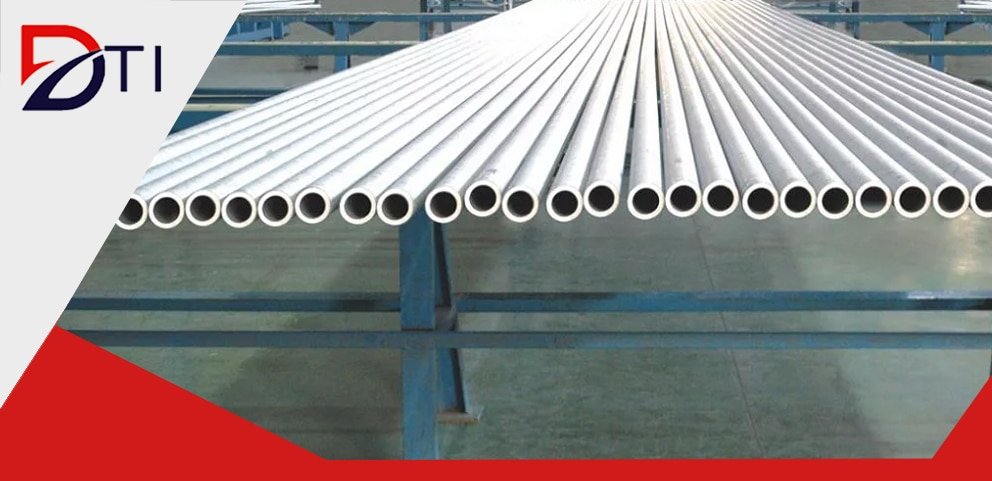
Benefits of Helically Wound Anti-corrosive High Fin Tubes
Increased Heat Transfer Efficiency: The helical design of the fins maximizes the effective heat transfer surface, thereby accelerating the heat exchange between the fluids/gases and improving process efficiency and cost of operation.
Higher Corrosion Resistance: Helically Wound Anti-corrosive High Fin Tubes are made to withstand rigorous working conditions by employing the necessary corrosion-resisting materials and protective coatings which resist degradation from chemicals, sea-water, humidity, industrial pollution etc.
Energy Savings: Increased heat transfer efficiency significantly decreases the energy required to reach desired process temperatures, reducing utility expenses and making processes environmentally friendly.
Extended Service Life of Equipment: High fin tubes are durable and the presence of corrosion-resisting elements guarantee that they will last longer, decreasing the replacement frequency and maintenance costs.
Reduced Space: Due to increased thermal efficiency of these high fin tubes smaller exchangers with smaller surface area can be used to yield same process output, thereby saving space at the installation site.